Skip to content

Website Translation

Google Translate needs a publicly accessible website. Translation will be available when this website is live. You can continue exploring this local preview in English.

Exothermic Welding Manufacturer · India

Exothermic Weld Powder & Graphite Moulds Permanent Connections

Amiable Impex manufactures the complete exothermic welding system — weld metal, semi-permanent graphite moulds and site-ready kits — for permanent earthing, railway and substation connections.

  • CPRI tested
  • IEEE 837 compliant
  • Exported to 104 countries
Live reaction Standby
Exothermic weld cross-section A graphite mould with crucible, weld powder, steel disc, tap hole and weld cavity, joining a copper cable to a copper ground rod as molten copper flows into the joint. CRUCIBLE STARTINGPOWDER WELD METAL DISC TAP HOLE CAVITY CABLE GROUND ROD
Fig. 01 — Section view01 / 05
Zero external powerSelf-sustaining reaction
Molecular bondCopper · Steel · Rod
Scroll
  • CPRI Tested · Govt. of India✦
  • IEEE 837 Compliant✦
  • CE Certified✦
  • RoHS Compliant✦
  • ISO 9001 Certified✦
  • Crisil Verified✦
  • MSME Registered✦
  • Exports to 104 Countries✦
Technician opening a graphite mould after an exothermic weld
Mumbai · India

Built by experience

Precision at every connection.

02

About Amiable Impex

Born from a Vision.
Driven by Innovation.

We engineer exothermic welding systems for permanent, dependable connections. From precisely blended weld powder to graphite moulds and complete field kits, every product is developed with one purpose — performance that lasts for decades.

Indian manufacturing discipline, backed by focused R&D and trusted across critical infrastructure worldwide.

Experience
10+Years
Global reach
104Countries
Production
03Units

Product portfolio

Everything a Perfect Weld Needs. From One Manufacturer.

Exothermic Weld — Weld metal & starting powder 01

Weld metal & starting powder

Exothermic Weld

Precision-blended copper oxide and aluminium weld metal, paired with starting powder for clean, dependable ignition on every shot.

  • Self-sustaining reaction — no power needed
  • Copper-to-copper & copper-to-steel welds
  • Consistent batch-to-batch reaction energy
View range
Common Joints — Semi-permanent graphite moulds 02

Semi-permanent graphite moulds

Common Joints

Graphite moulds for cable, rod, bar and surface connections — engineered for precise, repeatable joint geometry.

  • Cable, rod, bar & surface configurations
  • Straight, tee & cross geometries
  • Reusable semi-permanent graphite
View range
Exothermic Weld Joints — Every connection type 03

Every connection type

Exothermic Weld Joints

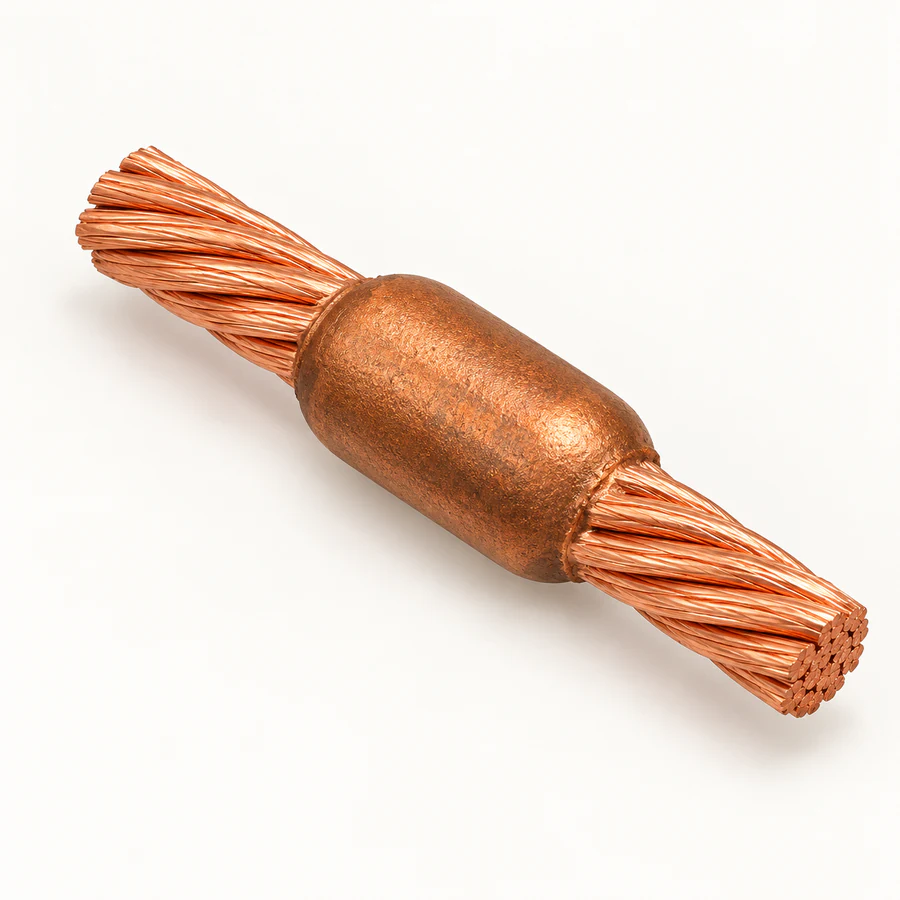
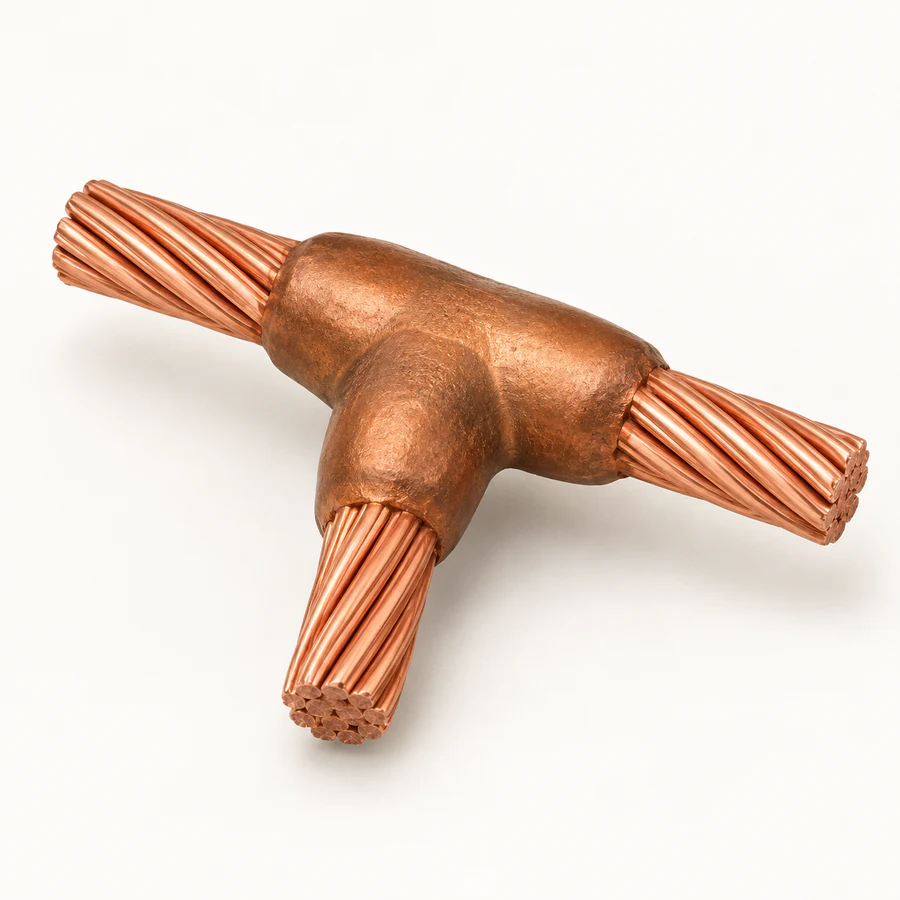
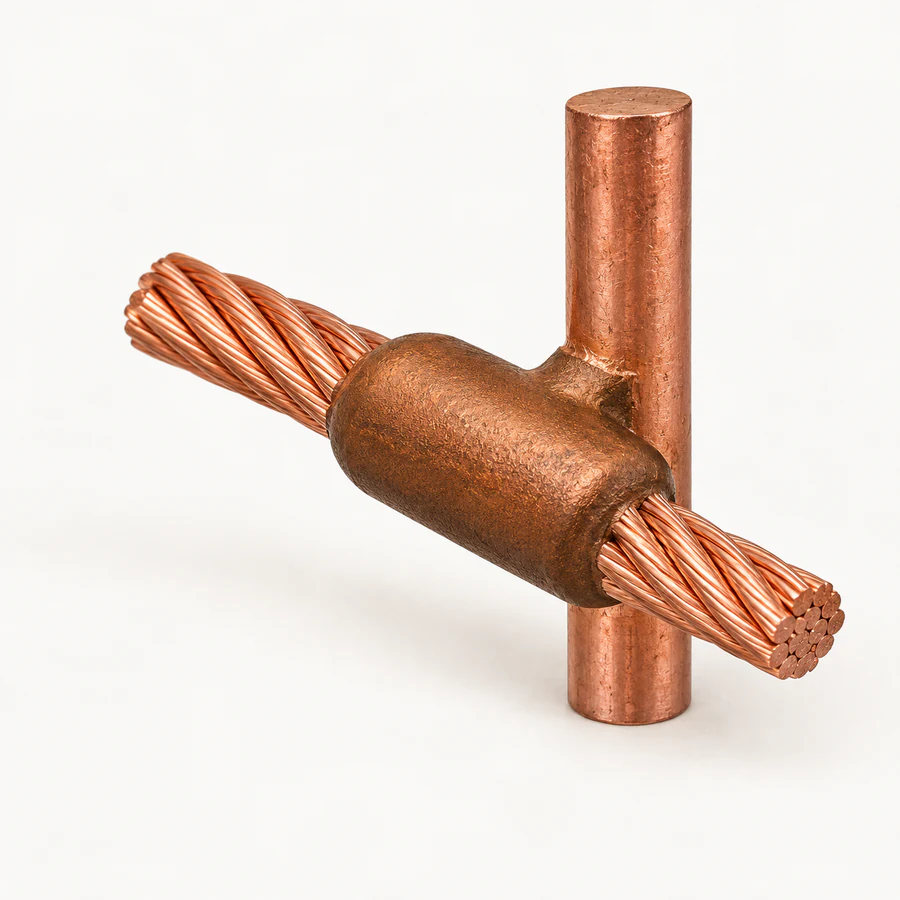
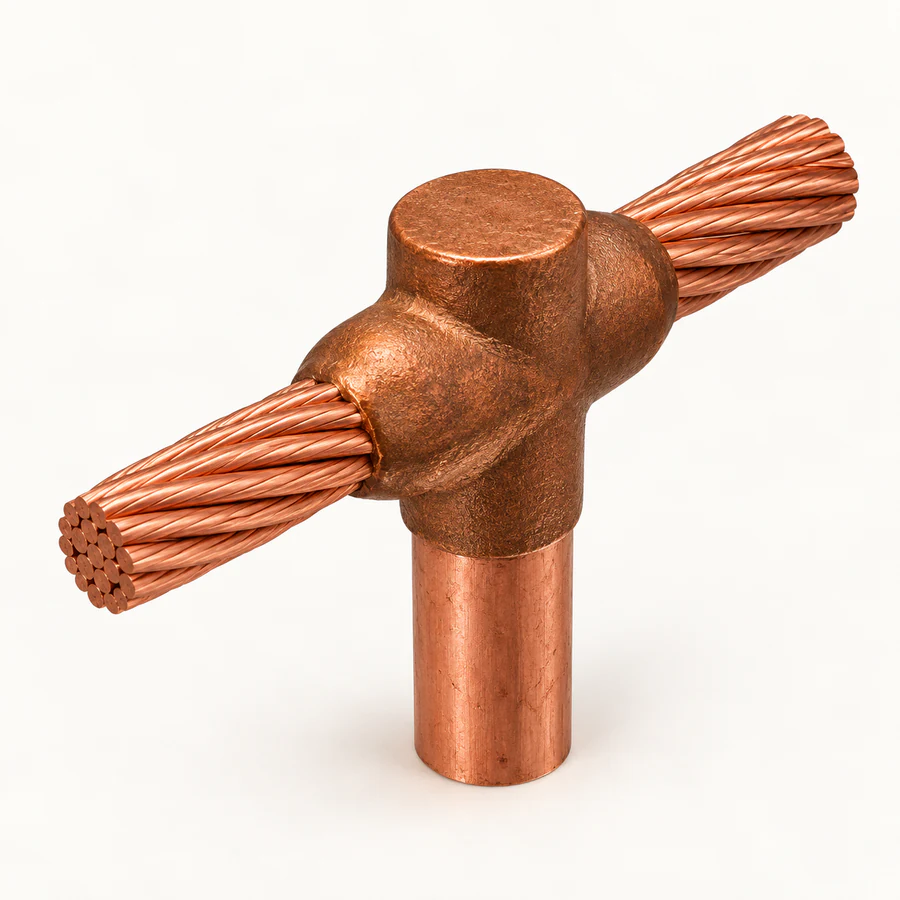
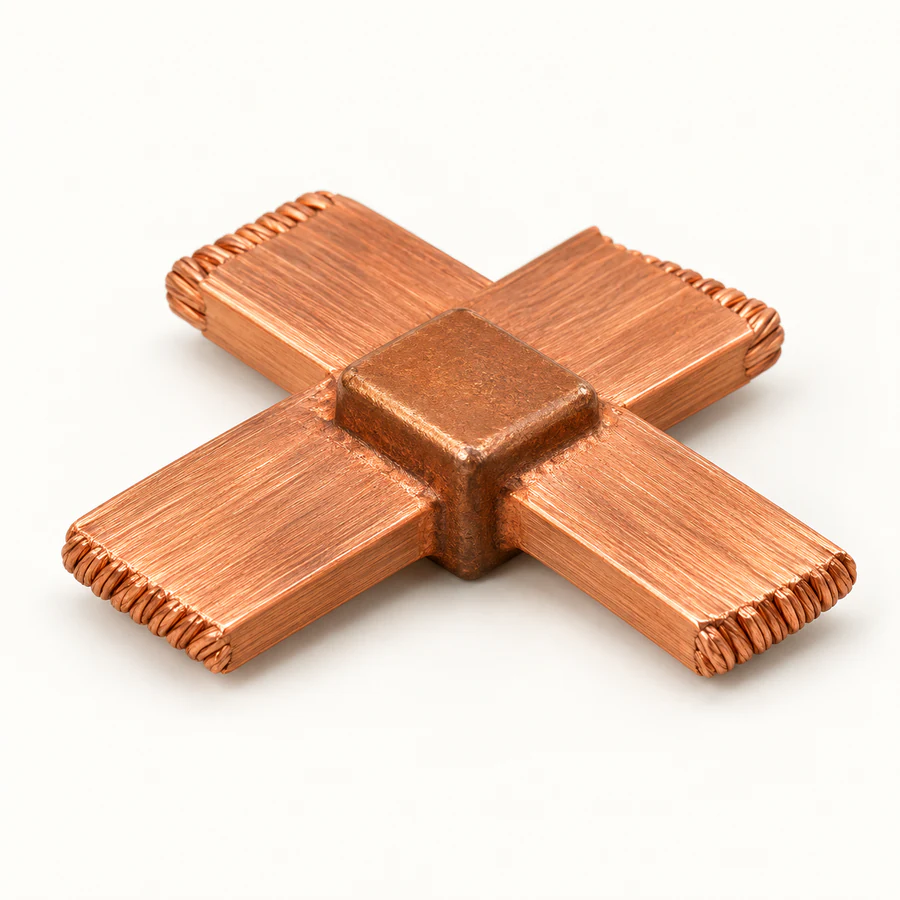
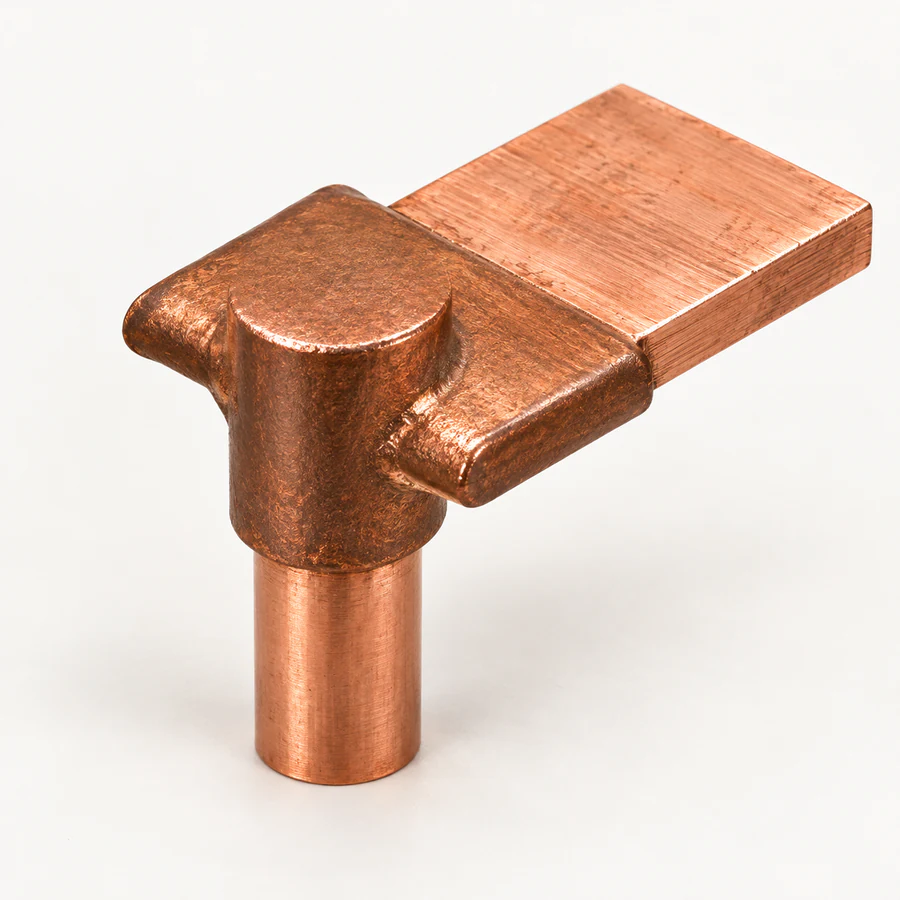
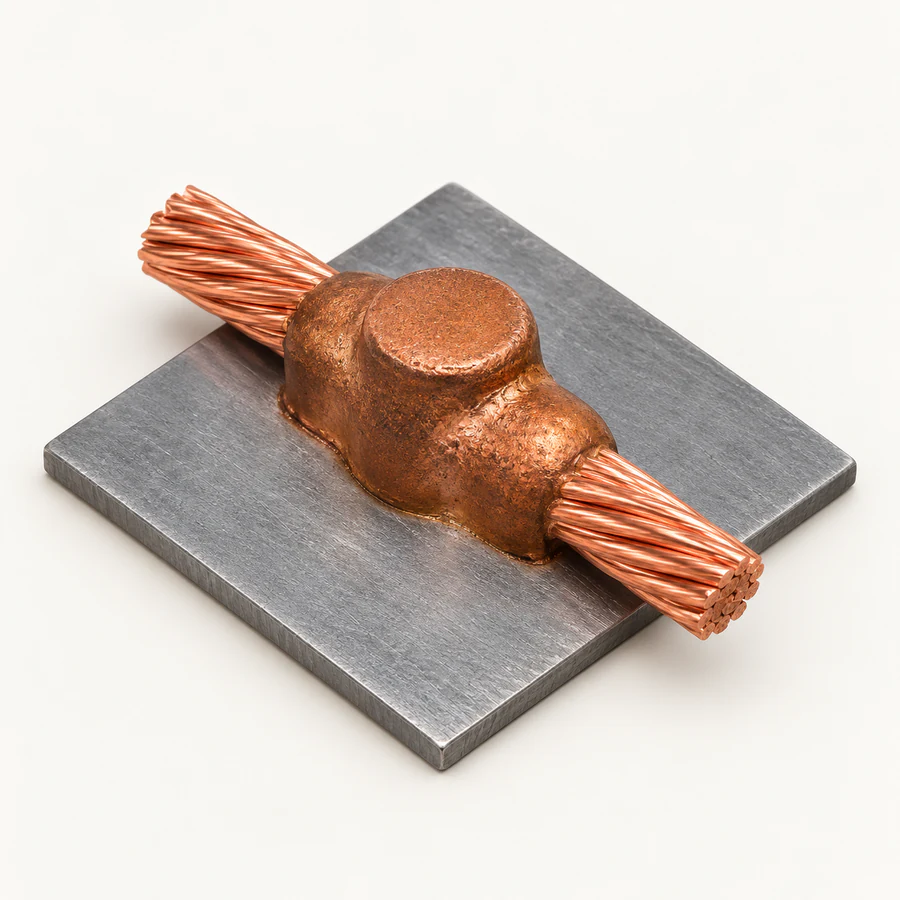
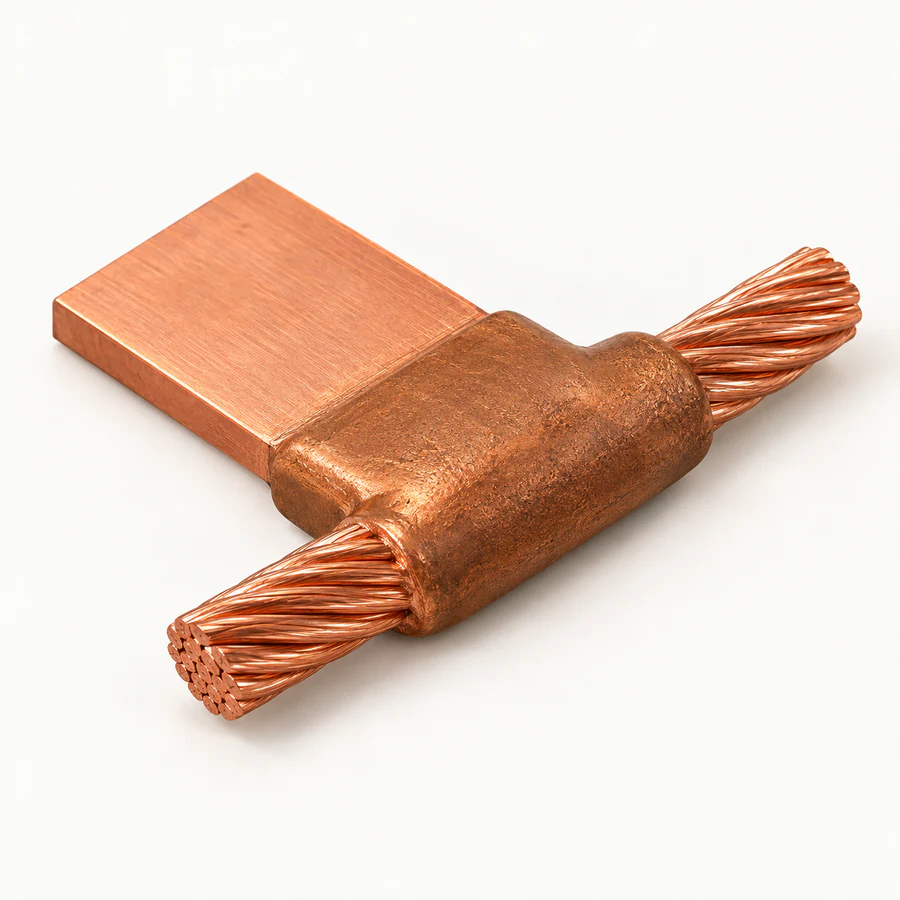
Cable-to-cable, cable-to-rod, rod-to-steel, tape, strip and rebar joints for every earthing and bonding layout.

  • Cable to cable, rod, tape & strip
  • Earth rod, steel & rebar connections
  • Rail signal & TLJB bonds
View range
Kits & Accessories — Site-ready welding kits 04

Site-ready welding kits

Kits & Accessories

Everything a crew needs on site — complete, matched and field-tested, so every weld is right first time.

  • Mould handle clamps & flint igniters
  • Steel discs, brushes & sealing compound
  • Heat-resistant safety gloves
View range

Need a specific mould or conductor size?

Tell us your conductors and joint type — we’ll match the right mould and weld metal.

Talk to an engineer

The technology

What Is Exothermic Welding?

Exothermic welding is a self-contained process that permanently joins conductors — such as copper to copper or copper to steel — using the heat of a chemical reaction. Powdered copper oxide and aluminium react inside a graphite mould, producing molten copper that fuses the conductors into one molecular connection.

Also called exothermic bonding, it is the preferred technique wherever high-integrity electrical connections and grounding are critical — and because the reaction generates all its own energy, it needs no auxiliary power or heat source.

The reaction

3CuO + 2Al → 3Cu + Al2O3 + heat

Copper oxide is reduced by aluminium. Molten copper forms the weld; the lighter aluminium-oxide slag rises and is removed.

Animated demonstration of the exothermic welding process in a graphite mould

Precision in every stage

The Exothermic Welding Process by an Exothermic Welding Manufacturer

Six controlled stages transform carefully prepared materials into a permanent molecular connection — without external power and with repeatable, site-ready precision.

  1. 01/06

    Preparation

    The surfaces of the alloy to be welded — such as copper or copper alloy — are cleaned to remove oxidation and debris, ensuring optimal bonding during the welding procedure.

  2. 02/06

    Setting the Mold

    A precision graphite mold shapes the fused metal during the welding procedure and withstands the intense heat generated by the reaction.

  3. 03/06

    Adding the Weld Powder

    A measured charge of exothermic weld powder — a blend of powdered copper oxide and aluminum — is placed into the mold to produce the heat required for welding.

  4. 04/06

    Ignition

    A small starting reactant initiates the exothermic reaction, releasing the energy needed to activate the weld.

  5. 05/06

    Welding

    Molten metal flows through the mold and fills the cavity, joining the metals with a molecular bond as strong as the base materials.

  6. 06/06

    Cooling

    The completed weld cools and solidifies into a permanent, durable connection engineered to withstand harsh service conditions.

Inside the graphite mould

Semi-Permanent Graphite Moulds, Machined for Precision

The mould is the heart of every exothermic weld — built to endure intense heat, contain the reaction precisely and perform across multiple welds. Tap a point to explore each component.

Semi-permanent graphite mould cutaway showing crucible, weld metal, steel disc, tap hole, weld cavity, cable and ground rod

Component 01 / 08

Crucible

The upper chamber of the mould. It holds the weld metal and starting powder, and is where the exothermic reaction begins.

Crucible
The upper chamber of the mould. It holds the weld metal and starting powder, and is where the exothermic reaction begins.
Weld metal
Copper oxide and aluminium powder. Once ignited it reacts within seconds to produce superheated molten copper.
Steel disc
A thin disc that seals the tap hole and melts at the right moment — releasing the molten metal into the joint.
Tap hole
The channel that guides molten copper from the crucible down into the weld cavity.
Weld cavity
Precision-machined around the conductors, giving the finished joint its exact shape and dimension.
Cable
The cleaned, dry copper conductor positioned in the mould — fused at a molecular level into the joint.
Ground rod
Copper or copper-bonded steel earth rod, joined permanently to the cable with no mechanical contact.
Graphite mould
A semi-permanent graphite body that withstands the reaction temperature and is reused for multiple welds.

Advantages

Why Engineers Specify Exothermic Welding

Five practical advantages behind permanent, low-resistance connections in critical electrical infrastructure.

01

No auxiliary power required

The reaction is completely self-sustaining — no electricity, generator or external heat. Ideal for remote sites and live installations.

02

Strong, durable connections

A molecular bond as strong as the parent conductor, built to carry high currents without loosening, corroding or working free.

03

High-temperature resistance

Joints withstand repeated fault currents and extreme heat in railway, metal-industry and substation environments.

04

Efficient and safe

A fast, controlled reaction contained entirely within the graphite mould — no open arc and no external power on site.

05

Long service life

Corrosion-resistant welds that keep resistance low and stable for the full life of the installation.

Manufacturing operations

Crafting Quality Across Every Manufacturing Stage

Controlled thermal processing and precision batching help an exothermic welding manufacturer deliver predictable reaction behaviour, dependable weld integrity and consistent output from one production batch to the next.

01 Raw materials
02 Precision batching
03 Controlled heating
04 Verified output
01 / Thermal control

Rotary Kiln Processing

The rotary kiln provides uniform, high-temperature processing for metal compounds used in thermite and exothermic welding materials. Its controlled rotation distributes heat consistently, supporting repeatable material preparation and stable weld performance.

02 / Formula accuracy

Automatic Weigh Batching

Automatic batching measures and dispenses aluminium and selected metal-oxide components in defined proportions. This precision limits formulation variation and supports consistent reaction energy, structural integrity and reliable field results.

In-house quality assurance

Four Layers of Weld Quality Control One Dependable Connection

Physical, mechanical, metallurgical and chemical testing provides clear evidence of material consistency, weld strength and long-term performance before products reach the field.

01PhysicalInternal flaw detection
02MechanicalHardness & load strength
03MetallurgicalChemistry & microstructure
04ChemicalPurity & process control

Physical test · Non-destructive inspection

Digital Ultrasonic Flaw Detection (USFD)

High-frequency sound waves help identify hidden discontinuities inside thermite-welded rail and metal connections without damaging the joint. USFD supports safer inspection, quality verification and dependable rail infrastructure.

Brinell Hardness Machine — Amiable Impex quality lab
01Brinell Hardness Machine

Mechanical · 3000 kg test

01

Brinell Hardness Machine

Applies a 3000 kg test force to measure weld-metal hardness — critical data for performance under heat and load.

Transverse Testing Machine — Amiable Impex quality lab
02Transverse Testing Machine

Mechanical · 200 T test

02

Transverse Testing Machine

With a minimum capacity of 200 tonnes, it proves welded joints withstand heavy transverse loads in rail infrastructure.

Spectrometer — Amiable Impex quality lab
03Spectrometer

Metallurgical test

03

Spectrometer

Precise chemical analysis of joint metal confirms each weld has the composition needed for high-stress, long-life service.

Microscope Test — Amiable Impex quality lab
04Microscope Test

Metallurgical test

04

Microscope Test

Microstructure, grain size and grain boundaries are examined to verify weld strength, consistency and freedom from defects.

Carbon Sulphur Determination — Amiable Impex quality lab
05Carbon Sulphur Determination

Chemical test

05

Carbon Sulphur Determination

High-temperature combustion analysis measures carbon and sulphur content to confirm raw-material purity.

Water Distillation Plant — Amiable Impex quality lab
06Water Distillation Plant

Chemical test

06

Water Distillation Plant

Produces high-purity laboratory water so testing of weld powder is free from any contamination.

Muffle Furnace — Amiable Impex quality lab
07Muffle Furnace

Chemical test

07

Muffle Furnace

Controlled high-temperature heating for ashing and heat treatment when evaluating graphite moulds and weld powder.

From formulation to final verification

Explore our manufacturing capabilities or request the complete exothermic welding product catalogue.

Global reach

From Mumbai to 104 Countries

Export-ready documentation, robust packaging and responsive support put our exothermic welding systems on power, rail and infrastructure projects across six continents.

Countries
104+
Continents
6
Plants
3

Why Amiable Impex

Why Choose Amiable Impex as Your Exothermic Welding Manufacturer?

Amiable Impex is an India-based exothermic welding manufacturer supplying high-performance exothermic welding powder, graphite molds, accessories and field-ready systems for permanent electrical connections.

Our solutions are engineered for consistent ignition, low-resistance bonding and dependable service across grounding networks, railway track systems and metal-fabrication projects in India and international markets.

One accountable manufacturing partner

Weld powder → graphite mold → accessories → finished joint

  1. 01

    Proven Manufacturing Expertise

    More than a decade of experience supports consistent, repeatable exothermic welding results.

  2. 02

    Built for Critical Applications

    Solutions for grounding, rail tracks, substations and metal-fabrication projects.

  3. 03

    Quality-Controlled Production

    Tested weld powder and graphite molds support durable, low-resistance connections.

  4. 04

    Application-Specific Systems

    Kits are matched to conductor sizes, joint types and project conditions. View our exothermic welding kit range.

FAQ

Exothermic Welding FAQs Products, Process & Performance

Clear answers about exothermic weld powder, graphite molds, joint performance and application requirements.

01

What is exothermic welding?

A process that permanently joins conductors — such as copper to copper or copper to steel — using the heat of a copper oxide and aluminium reaction inside a graphite mould. No external power is needed.

02

How does the welding process work?

Clean the conductors, set them in a graphite mould, add weld powder, ignite the starting powder with a flint igniter and let the molten copper fuse the joint as it cools.

03

Which metals can be welded?

Copper to copper, copper to steel, copper-bonded ground rods and other conductor combinations, with the right mould and powder size for each pair.

04

What is a semi-permanent graphite mould?

A reusable, heat-resistant mould that holds the conductors and shapes the molten metal precisely — suitable for multiple welds.

05

Why choose it over mechanical connectors?

A molecular bond cannot loosen or corrode at the interface, carries current equal to the conductor and keeps resistance stable over time.

06

Where does Amiable Impex supply?

From our Mumbai headquarters and plants in Maharashtra and Gujarat, we supply customers in 104 countries.

Need a recommendation for your conductor or joint type? Talk to our technical team

Get in touch

Request a quote or download our brochure.

Share your conductor sizes, joint types and quantities — our team will recommend the right moulds and weld metal and respond promptly.

01Technical guidance
02Matched products
03Prompt response

We reply within one business day. Your details are never shared.

Exploring our precision testing tools

Excellence in Every Detail Our Uncompromising Commitment to Quality

Purpose-built testing equipment helps our team verify strength, hardness, composition and laboratory purity with repeatable precision.

Transverse Load Testing Machine used for exothermic welding quality control 01

Mechanical strength

Transverse Load Testing Machine

Brinell Hardness Machine used for exothermic welding quality control 02

Material hardness

Brinell Hardness Machine

Carbon Sulphur Apparatus used for exothermic welding quality control 03

Chemical composition

Carbon Sulphur Apparatus

Water Distillation Plant used for exothermic welding quality control 04

Laboratory purity

Water Distillation Plant

Start a conversation

Request A Quote

Tell us what you are connecting. Our team will help identify the right weld metal, graphite mould and accessories.

Your details stay private and are used only to reply.

Call Get a quote